
Understanding how cellular ecosystems govern tissue health and disease
Cancer Biology:
Cancer arises not only from genetic alterations within tumor cells but also from dynamic interactions with the surrounding tissue ecosystem. Our research seeks to understand the principles that govern tumor cell fitness; the ability of cancer cells to survive, adapt, evolve, and metastasize within changing tissue environments. By studying human tumor ecosystems at high resolution, we aim to uncover the mechanisms that drive metastasis, therapeutic response, and treatment resistance, creating new opportunities for precision cancer therapy.

Key questions:
How do cancer cells survive, evolve, and metastasize?
How do interactions with immune and stromal cells regulate tumor fitness?
Which mechanisms drive therapeutic response and resistance?
Experimental Approaches:
We combine patient-derived organoids and multi-cell type assembloids, single-cell profiling, spectral flow cytometry, AI-enabled computational biology, and functional perturbation to dissect how tumor, immune, and stromal cells interact to regulate cancer progression.
Immune Biology:
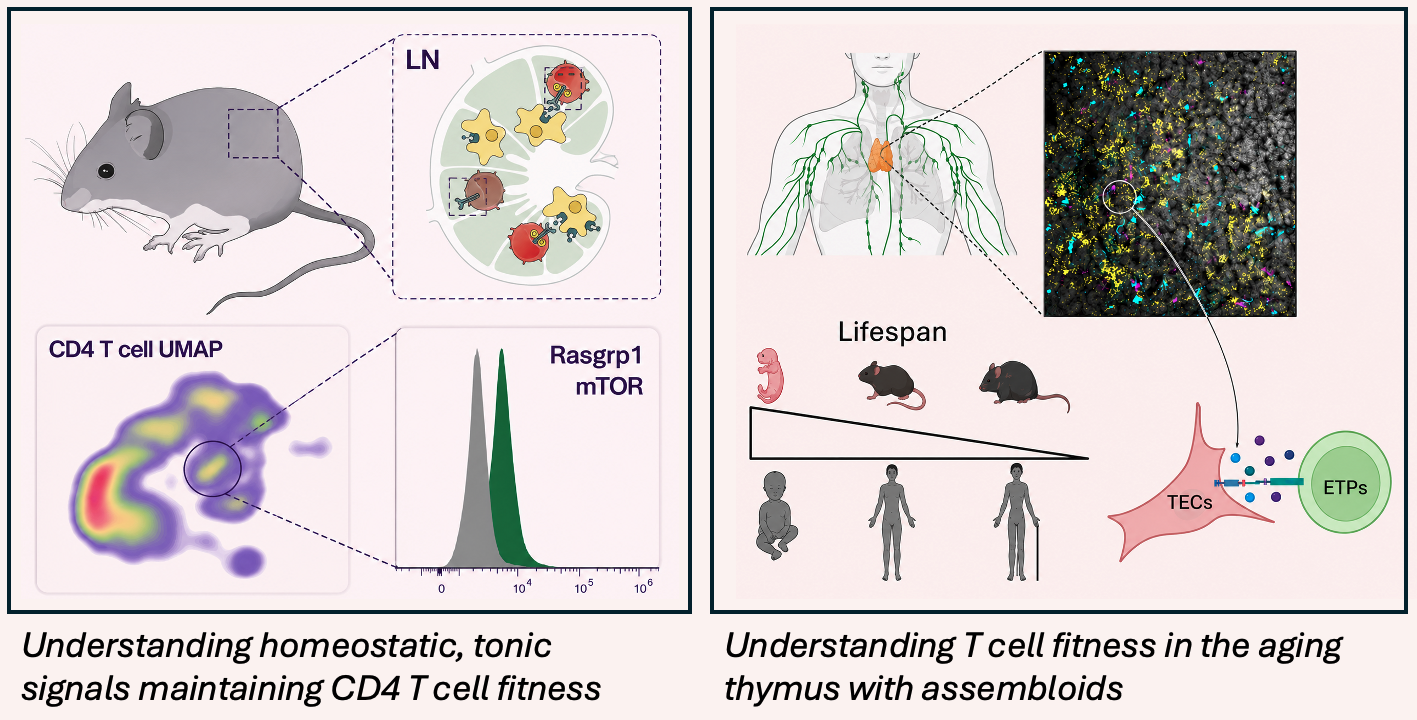
Effective immune responses depend on the ability of T cells to sense their environment, integrate molecular signals, and maintain functional fitness throughout their lifespan. Our research seeks to define the signaling networks that govern T cell fitness; the capacity of naïve, effector, and regulatory T cells to maintain immune homeostasis, mount protective immune responses, and prevent autoimmunity.
Key questions:
How do signaling networks regulate T cell fitness and function?
How are T cell activation, metabolism, and immune tolerance coordinated?
Which signaling pathways can be targeted to improve immune therapies?
Experimental Approaches:
We combine genetic mouse models, high-dimensional phospho-signaling analyses, single-cell molecular profiling, assembloids, and functional immune assays to define how signaling networks regulate the biology of distinct T cell subsets in health and disease.
Stem cells & Regenerative Biology:
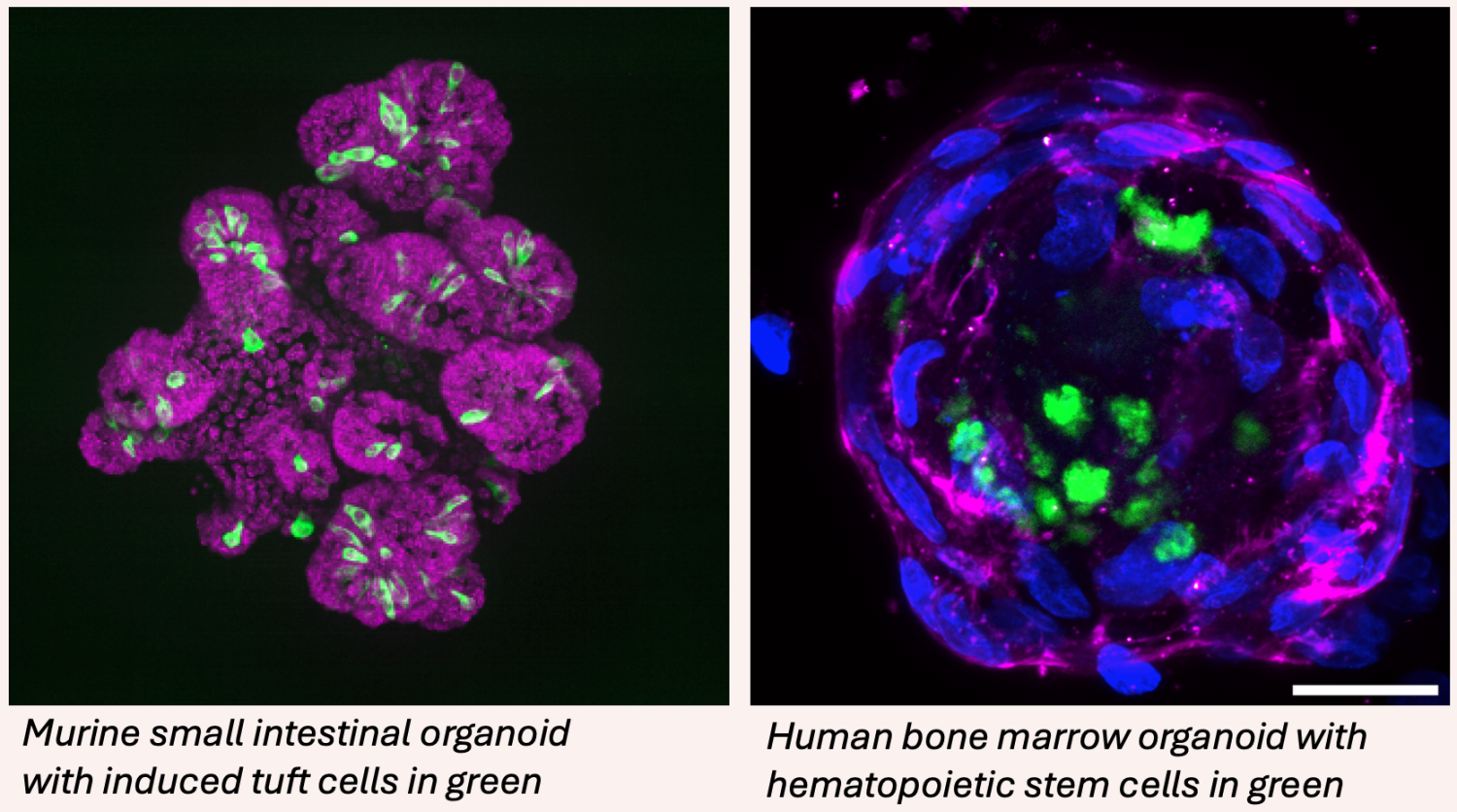
Tissue maintenance and regeneration depend on the ability of stem and progenitor cells to sense their environment, adapt to injury, and make appropriate lineage decisions. Our research seeks to define the principles that govern stem cell fitness; the capacity of stem and progenitor cells to maintain tissue homeostasis, regenerate damaged tissues, and respond to environmental cues.
Key questions:
How do stem and progenitor cells maintain fitness and regenerative capacity?
How do niche-derived signals regulate stem cell plasticity and lineage decisions?
Which mechanisms govern tissue regeneration and epithelial homeostasis?
Experimental Approaches:
Using human organoids, assembloids, genetic mouse models, single-cell profiling, AI-enabled computational biology, and functional perturbation, we investigate how signaling pathways and niche-derived cues regulate stem cell fitness, lineage commitment, and tissue regeneration across multiple epithelial tissues, including the intestine, skin, and thymus.
Discovery Platforms:
Deconstruct & Reconstruct: We experimentally deconstruct tissue ecosystems, apply AI-enabled computational approaches to generate mechanistic hypotheses, and reconstruct multicellular systems using organoids and assembloids to test predicted cell-cell interactions.
Human Model Systems
Patient-derived organoids and multicellular assembloids that faithfully model human tissues and disease.
Multimodal Profiling
Single-cell and spatial molecular profiling to define multicellular ecosystems at high resolution.
Computation & AI
AI-enabled computational integration, network analysis, and predictive modeling to uncover the principles governing multicellular systems.
Functional Perturbation
Genetic, pharmacologic, and immune perturbations to establish causal mechanisms and identify therapeutic opportunities.

Biological Systems:
The Roose lab investigates how cellular ecosystems maintain tissue homeostasis, adapt during aging and regeneration, and become dysregulated in cancer and autoimmune disease. These datasets are integrated using AI-assisted computational approaches to identify conserved cellular states, interaction networks, and therapeutic vulnerabilities

Funding:
We are grateful for past and current the financial support from the following agencies:
- NIH (NIAID, NCI, NHLBI)
- Foundations (Mark Foundation for Cancer Research, Cancer League, Lopker Foundation, Shorenstein Pancreatic Cancer Fund)
- UCSF Programs (Bakar ImmunoX CoProject, Bakar Aging Research Institute, PBBR)
- Industry (AutoImmuno Profiler Program with Eli Lilly, SRA with Tahoe TX)